The Origin
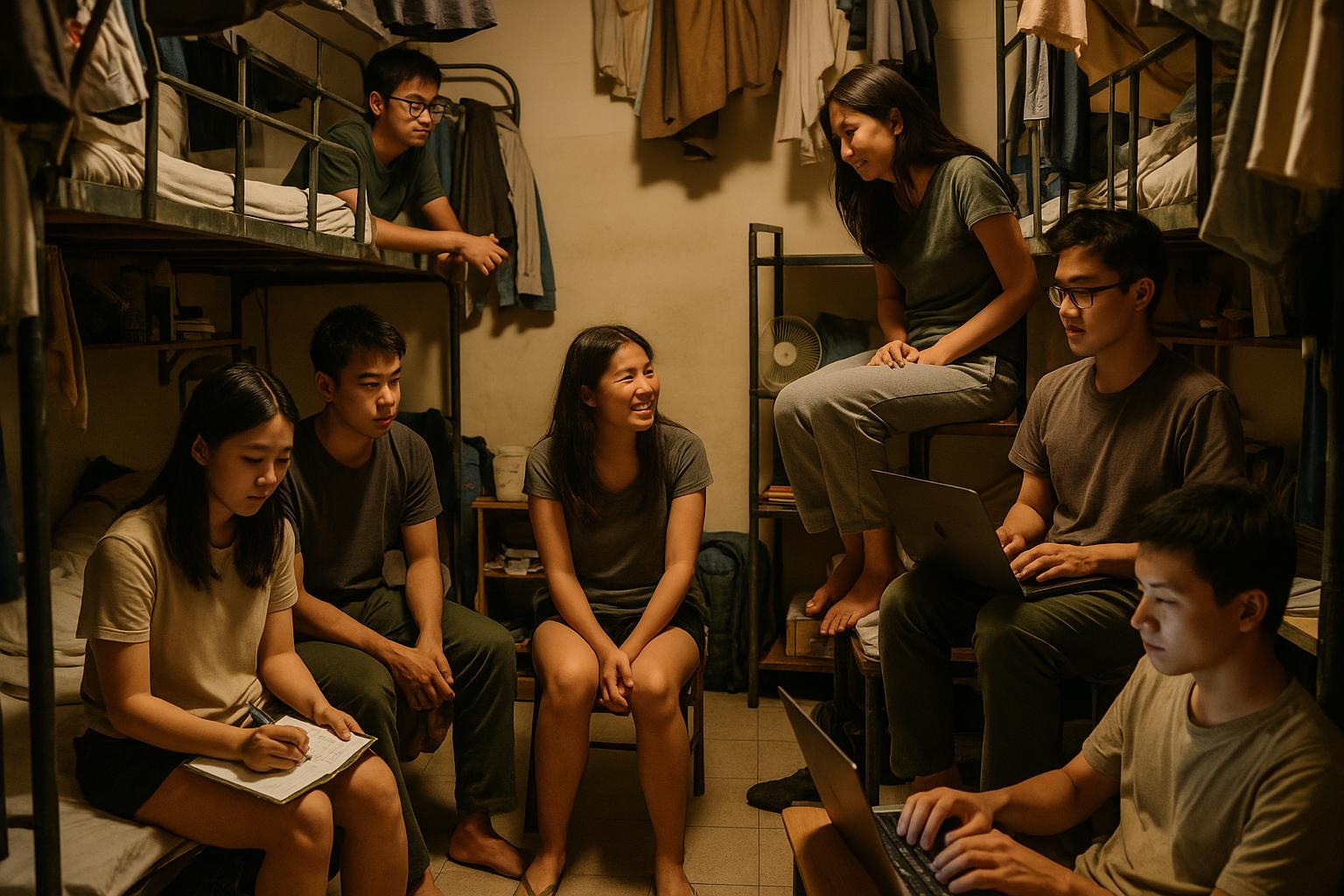
We walked into a small apartment in New Jersey, shared by a group of Indian students, and were struck by how much they'd had to figure out alone. Housing, finances, basic services. With limited information and no real support system, they made it work. But at a real cost. That conversation sparked everything.
Why does starting a new chapter have to feel like a struggle? With the right guidance, real support and a welcoming community, this experience could be better, easier, smoother and more empowering.
The Problem at Scale
The United States hosts more international students than any other country, yet the systems designed to support them are fragmented, generic and largely inaccessible.
15.3M
Students enrolled in US higher education, Spring 2025, a record high that continues to grow year on year
3.2M
International students studying in the US in 2024–2025, navigating relocation with little to no coordinated support
~$250B
Estimated contribution of international students to the US economy, a population that remains deeply underserved
Understanding the Pain Points
Lack of timely support
Critical guidance arrives too late, often after students have already made costly decisions about housing, finances and logistics.
Generic information
Existing resources are one-size-fits-all. Students from different countries, with different budgets and universities, need different answers.
Survival mode
Students forced to navigate uncertainty alone often end up making rushed, uninformed decisions under anxiety and stress.
The Guiding Question
"How might we support international students in navigating life abroad through tailored guidance and community-driven support systems that make transitions and daily living less overwhelming?"
Design Process
An end-to-end double diamond process, built on mixed-method research, rapid prototyping and iterative testing.
Discover
Understand the problem through research and lived experience
Define
Synthesise findings into a clear problem statement
Ideate
Generate concepts through workshops and brainstorming
Prototype
Build lo-fi and hi-fi mockups to make ideas tangible
Test
Validate designs with real users through usability sessions
Analyse
Interpret findings and prioritise improvements
Refine
Iterate on designs to sharpen clarity and usability
Deliver
Present the refined prototype and strategic recommendations
Concept Testing
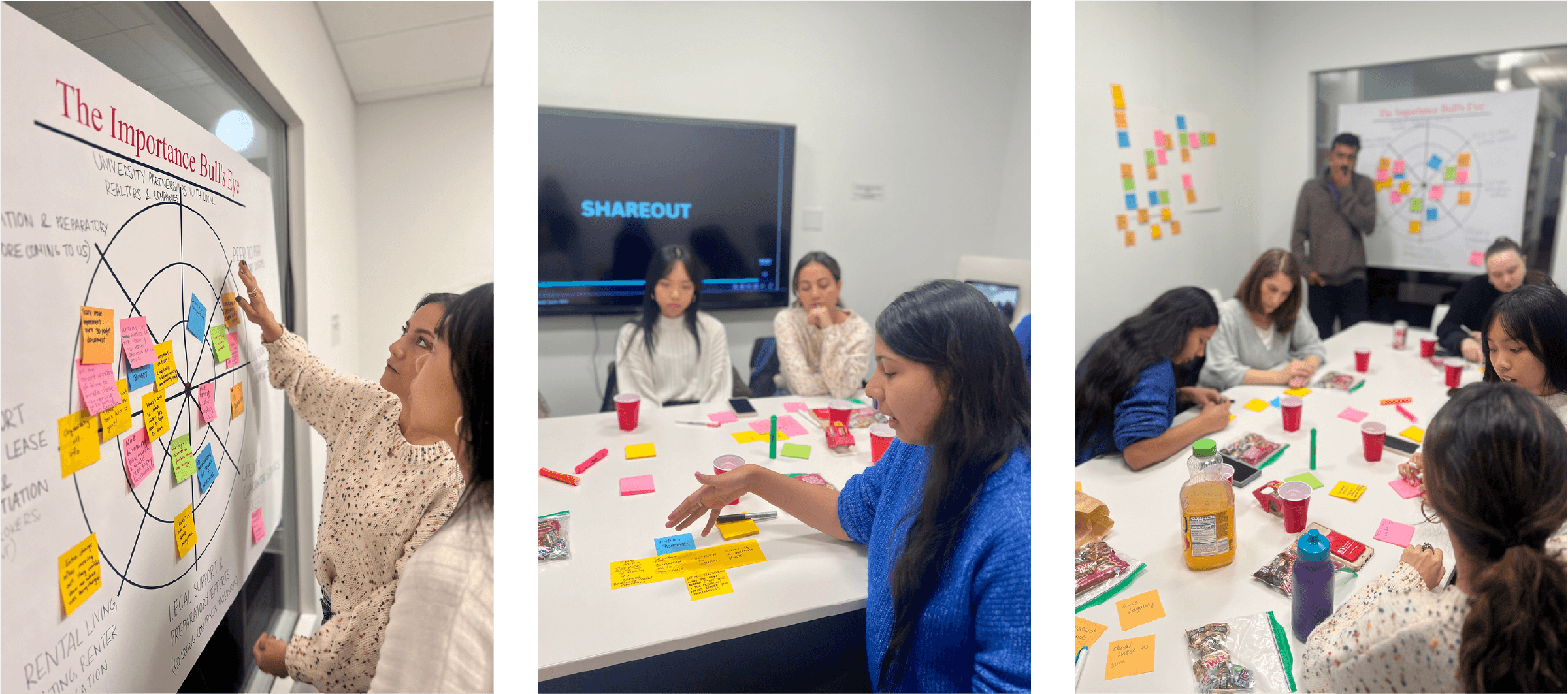
Before writing a single line of code, we distributed a one-page concept brochure to a diverse group of stakeholders, American and international students, faculty, university administrators and real estate agencies. We then ran a participatory workshop with students from eight countries to define the most critical features.
The One-Pager
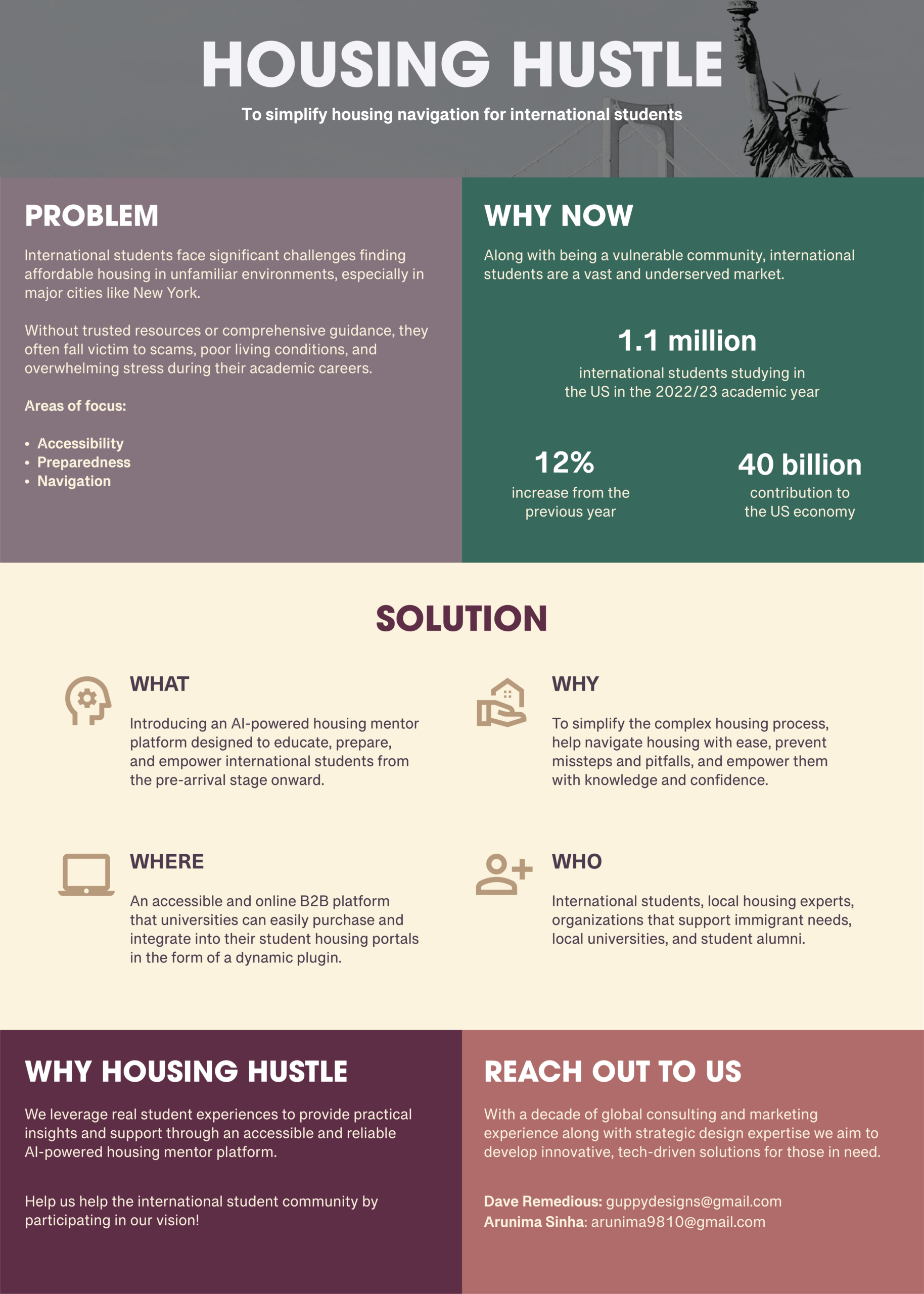
"
By having somebody who is already in the city, a kind of mentor who has traveled this path before and is willing to help, could be a real game changer.
International Student, New York · Design Strategist
Secondary Research
An extensive landscape analysis mapped the competitive environment and identified potential collaborators for EASE at various stages, helping us sharpen our unique position in the market.
Competitive landscape analysis
Potential collaborators mapped by role and stage
PESTEL analysis, EASE
Political
Economic
Social
Technological
Environmental
Legal
Differentiating Factors
While other platforms offer fragmented, post-arrival support, EASE is built around three core differentiators.
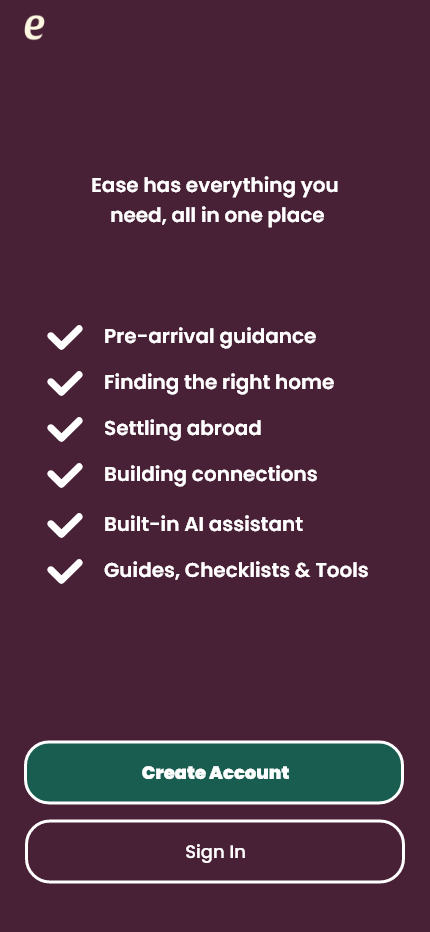
Pre-arrival guidance
A personalised step-by-step roadmap that starts before students even board the plane, covering visa preparation, housing shortlists, financial setup and pre-departure checklists tailored to their specific city and background.
Housing support
Three AI-curated housing options matched to the student's budget, lifestyle preferences and proximity to campus, cutting through the noise of generic listings to surface genuinely relevant, verified options with direct contact routes.
Community & integration
A peer and alumni network that connects new students with people who have already navigated the same transition, offering mentorship, cultural orientation, local tips and a genuine sense of belonging from day one.
Business model canvas, EASE
Key Partners
Key Activities
Value Proposition
Customer Relationships
Customer Segments
Key Resources
Channels
Cost Structure
Revenue Streams
Project Planning
Each function was broken into deliverables, mapped against timelines, milestones, risks and exit strategies. For every function we planned five scenarios, from very positive to very negative, creating a development matrix that served as live risk management throughout the project.
Functional breakdown plotted over time
Developmental matrix, 5 scenarios per function
Data Curation
We sent carefully crafted questions to students across eight countries to collect preference data. This was fed into an AI model trained to extract relevant information based on user inputs, then rigorously tested for accuracy against real student needs before being integrated into the platform.
AI data output pipeline
Student input
Preferences from 8 countries via structured survey
Data cleaning
Responses structured, normalised and tagged
AI model
Extracts personalised guidance from student inputs
Accuracy testing
Validated against real student needs
Personalised roadmap
8-step plan per student, city and priorities
Pre-arrival insights form
Customised Roadmap
The AI-curated data translates into a personalised roadmap, eight steps tailored to each student's background, budget and destination city.
Design System
EASE's visual identity is built on warmth, clarity and cultural openness, designed to feel welcoming to students arriving somewhere unfamiliar.
Colour palette
Typography
Aa
Cormorant Garamond
Display · Headings · 300 Light Italic
Aa
DM Sans
Body · Labels · 300 / 400 / 500
Aa
Manrope
UI · Navigation · 300 / 400 / 500
Aa
Inter
Data · Micro-copy · 300 / 400
Information Architecture
Before wireframing, we mapped the full information architecture, every screen, content node and navigation path, to ensure the platform felt intuitive from the very first tap.
User feedback insight
"Financial Documents or Visa Appointment might not be self-explanatory for new users, a brief contextual tooltip would really help."
Led to the addition of inline info icons throughout the onboarding flow
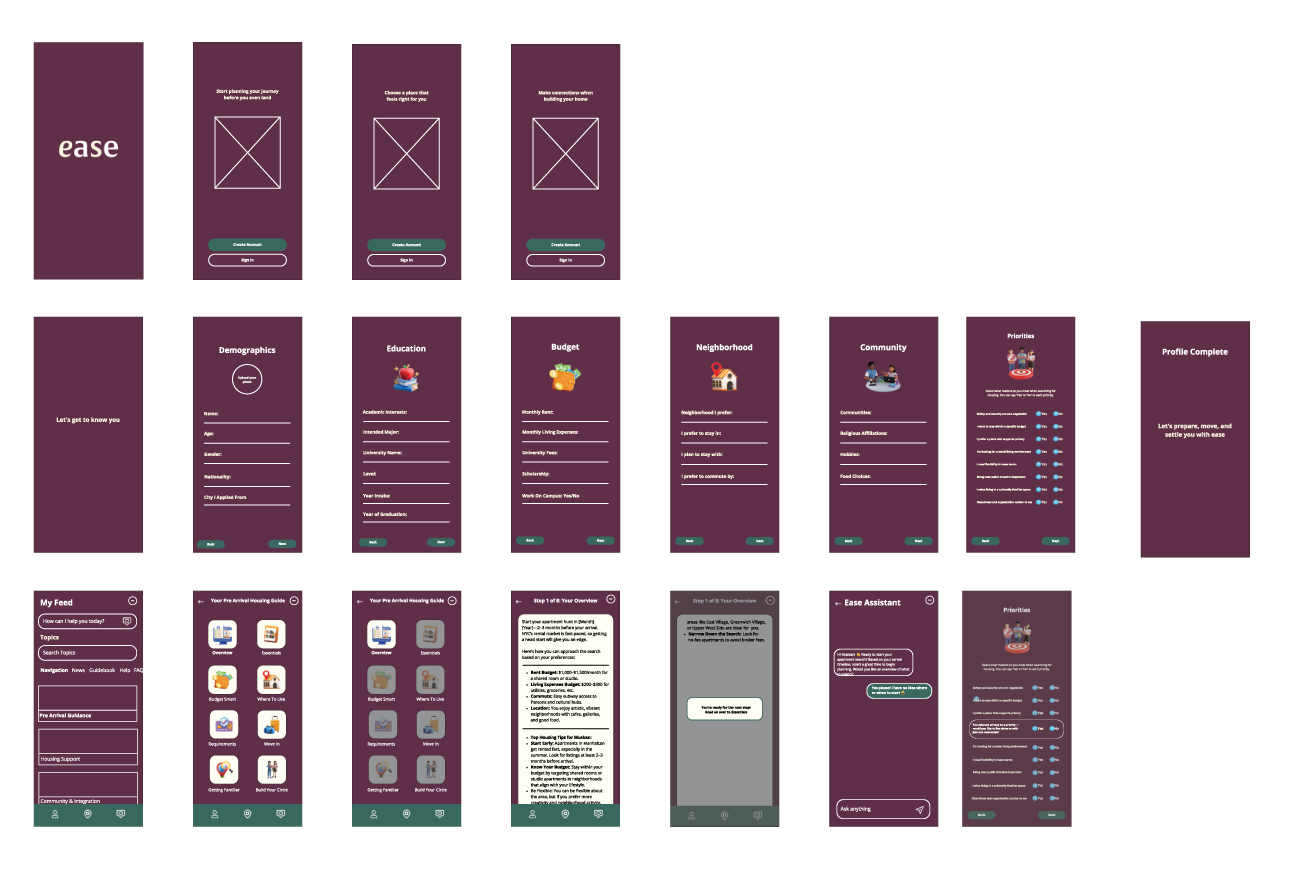
Lo-Fidelity Prototype
With the information architecture mapped and the guiding question locked, we wireframed the core user journey, sketching every screen and decision point before committing to any visual direction.
Usability Testing
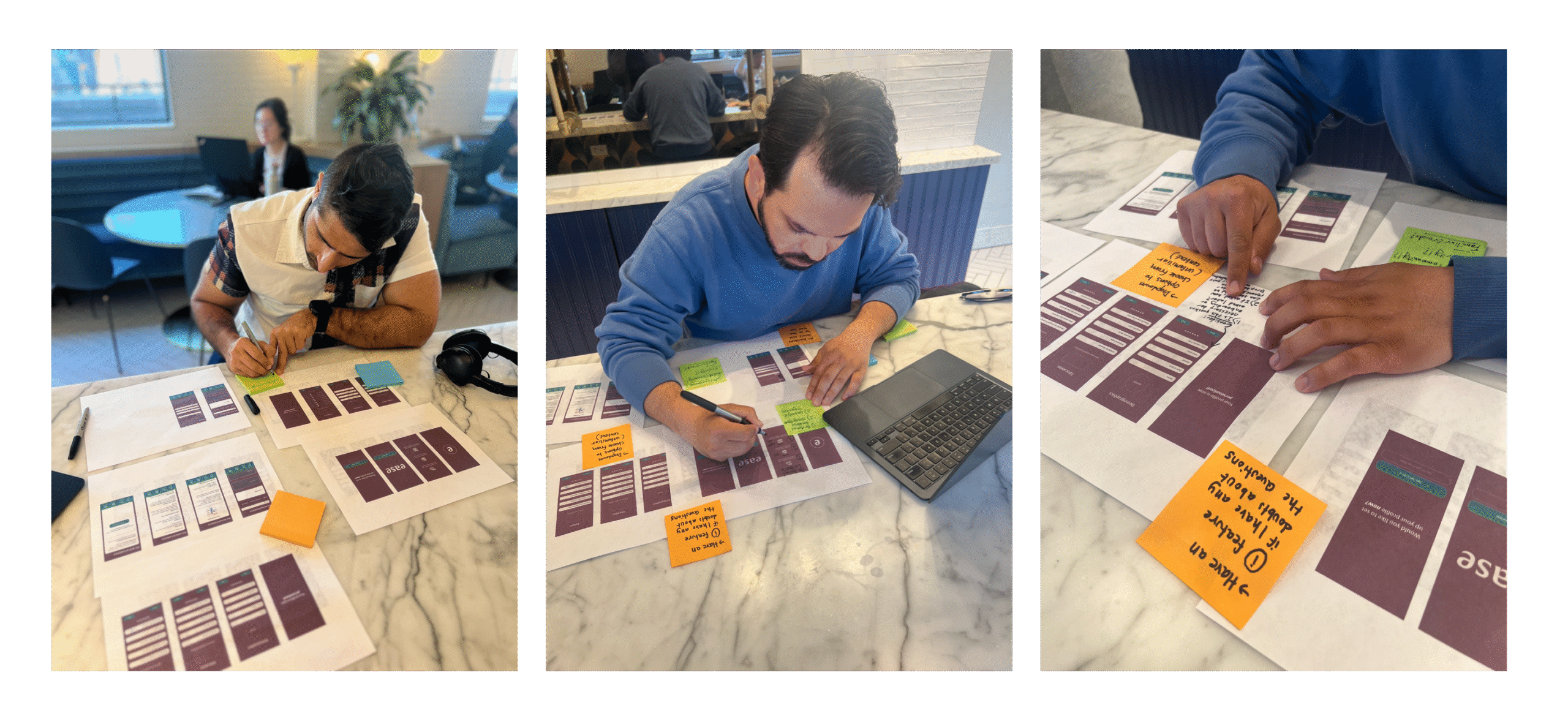
A hands-on usability workshop validated the UX and AI guidance, measuring how intuitively students navigated the platform and whether the content felt genuinely relevant to their situation.
Usability testing workshop, May 2025
Participant feedback and synthesis
Refined Prototype
Workshop feedback drove targeted refinements, simplifying onboarding, adding contextual info icons, and strengthening the AI personalisation layer. Every change was evidence-based and re-tested before delivery.
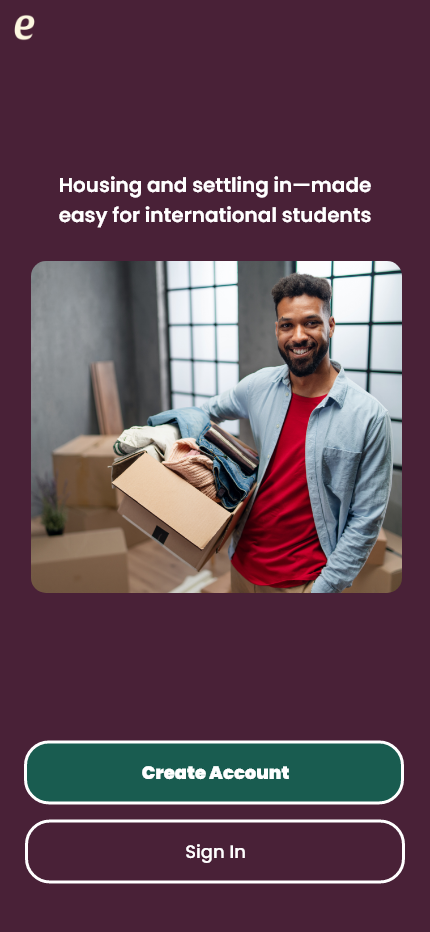
Screen 1 / 13
01
Welcome
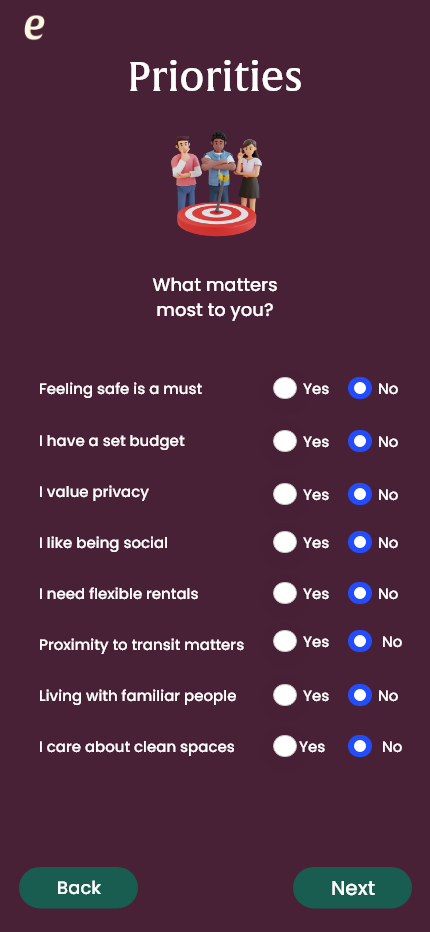
Opening screen introducing EASE to the incoming student.

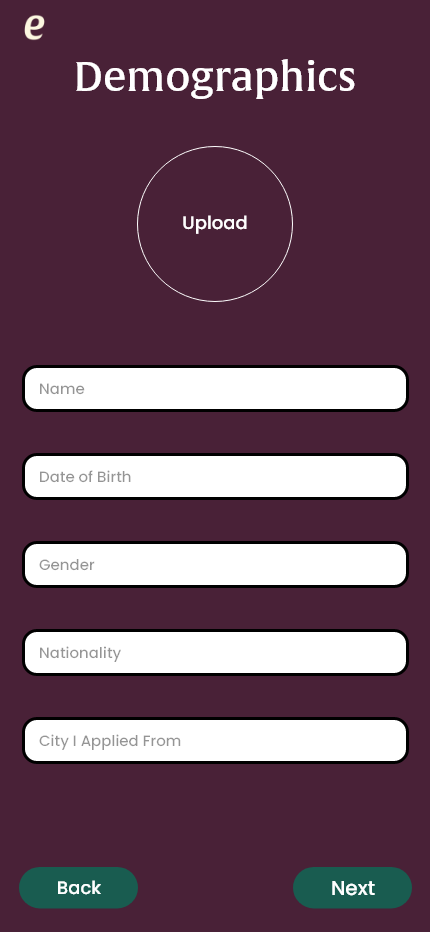
02
Onboarding
Background questions collecting origin and destination city.
03
Background
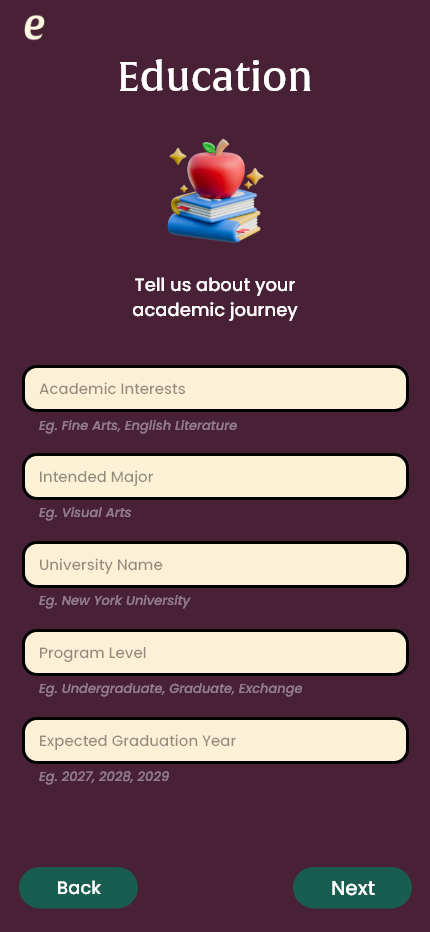
University and programme details for personalisation.
04
Priorities
Student selects top priorities to shape AI recommendations.
05
Dashboard
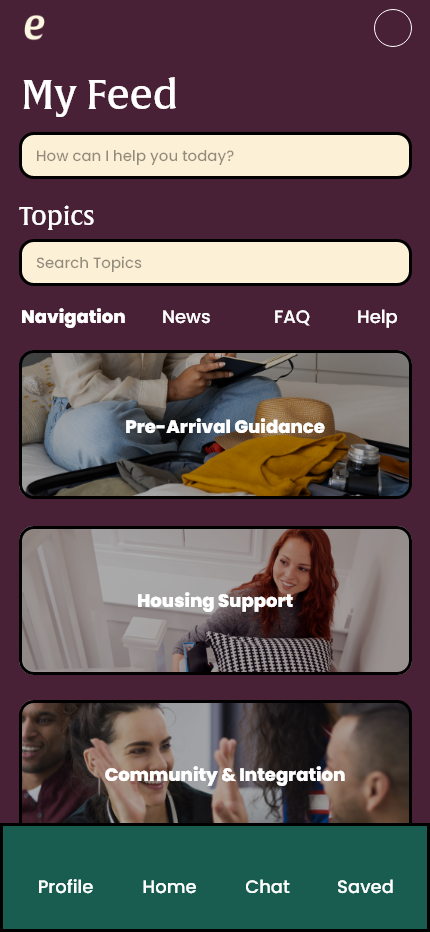
Central hub showing roadmap, resources and quick actions.
06
Roadmap
The 8-step personalised guide tracked against timeline.
07
Resources
Curated local services and essential guidance at each stage.
08
Alumni connect
Browse and connect with alumni who made the same move.
09
Housing
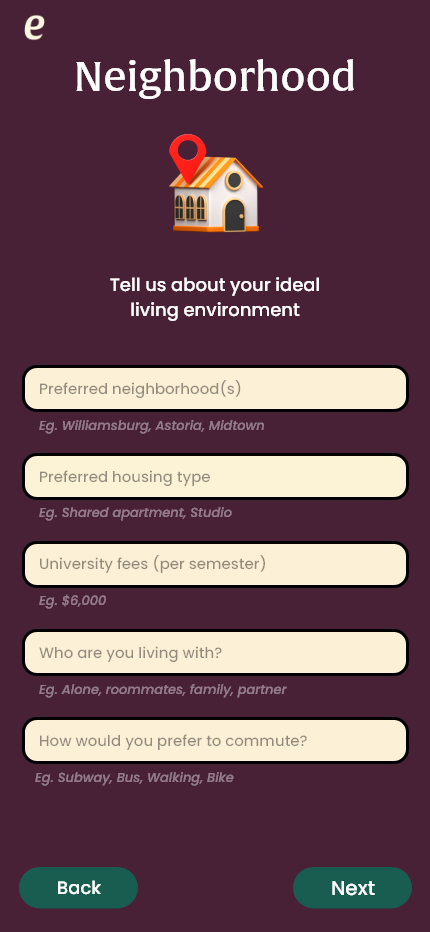
Three AI-matched housing options based on your preferences.
10
Filters
Refine results by price, distance and room type.
11
Map view
Housing options plotted on a map with campus proximity.
12
Property detail
Full listing detail with photos, pricing and agent contact.
13
Community
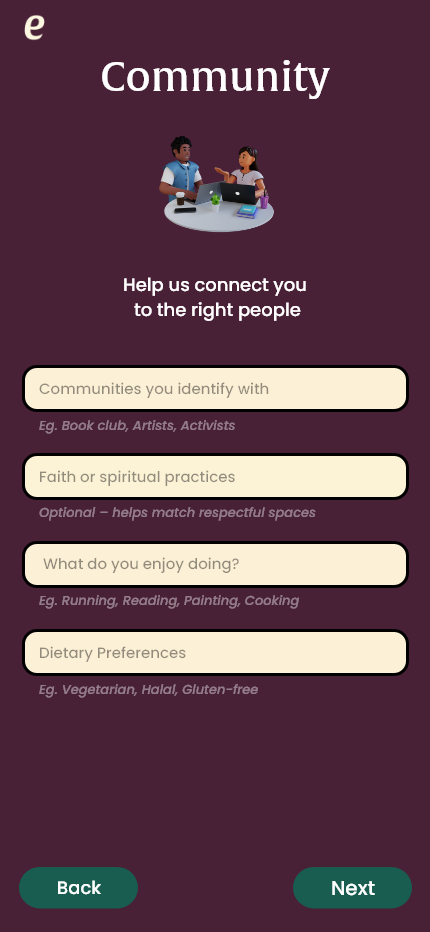
Peer groups, local events and community discussions.
01
02
03
04
05
06
07
08
09
10
11
12
13Social Impact
Belonging
EASE helps international students feel at home in a new country, fostering emotional comfort and cultural belonging, critical for mental well-being.
Community
By connecting users to alumni, peers and resources, EASE reduces isolation and creates cross-cultural bridges that enhance mutual understanding and empathy.
Confidence
Personalised onboarding and step-by-step guidance help students feel more capable and self-reliant, turning uncertainty into agency from day one.
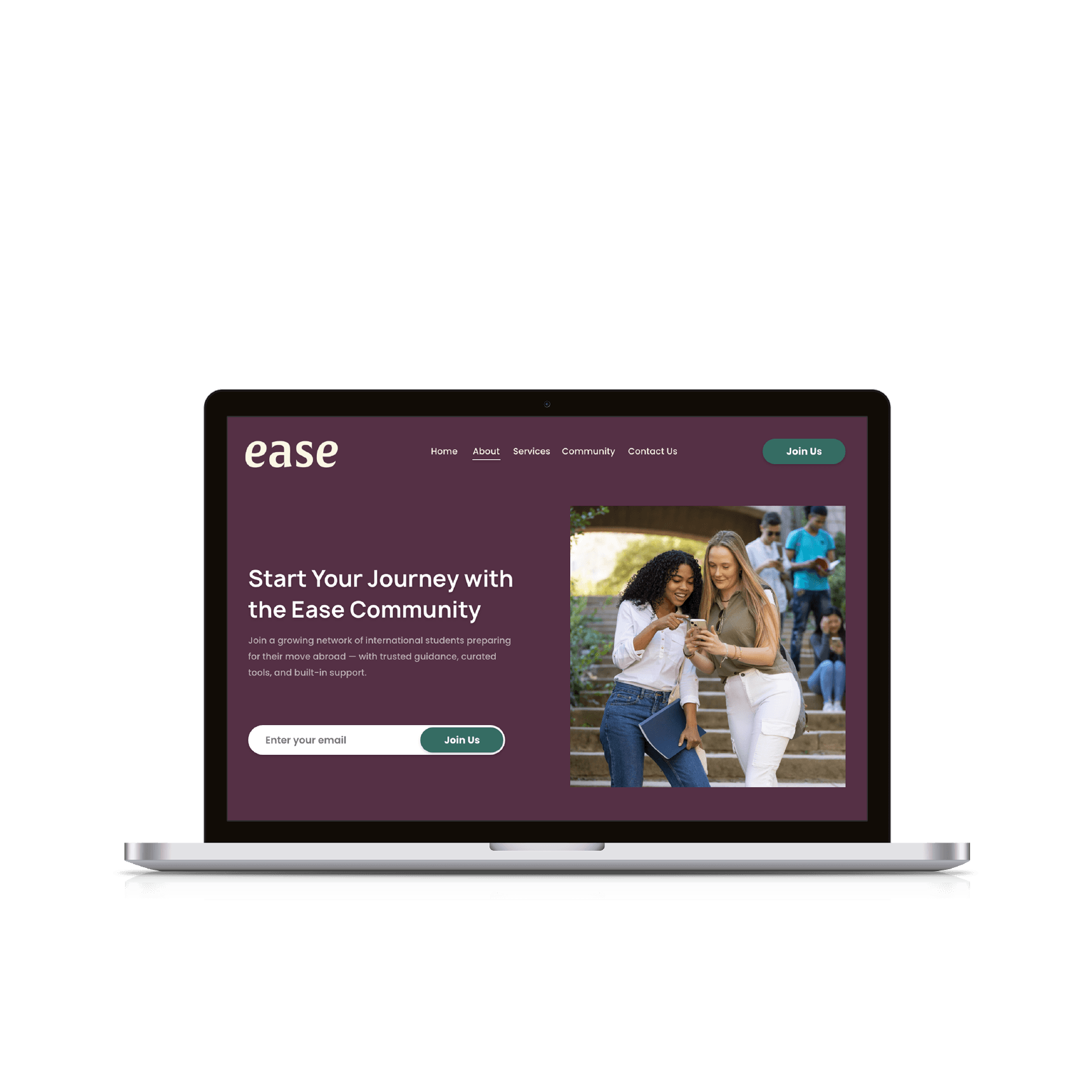
Marketing Website
Following prototype testing, we designed a lightweight marketing website to begin user recruitment, inviting prospective students to sign up and join the early-access testing cohort before the platform launches.
Sign-up form capturing student background and interests
Waitlist-based onboarding to manage early cohort growth
University partnership deck for institutional co-launch
Early access, sign up if interested
Next Steps
Partnerships
Secure technical and academic partners to support development and deployment
User Onboarding
Begin outreach to student communities for early adoption and feedback
Mentorship
Guidance from AI experts, ed-tech and international student service specialists
Refine MVP
Finalise the minimum viable product based on advisor and early-user feedback
Pilot Launch
Beta test with a partner university to validate features and gather data