Assessing the Commercial Potential of Sargassum Seaweed in the Caribbean: Social, Environmental, and Economic Impacts, and Its Potential for Commercial Use in Bio-Based Alternatives to Petrochemical Products
RESEARCH PROJECT
Dave Remedios
Abstract
This research project explores the commercial potential of Sargassum seaweed, a rapidly accumulating marine biomass in the Caribbean, as a sustainable raw material for the manufacture of bio-based foam in athletic footwear soles. The study was motivated by both the environmental threat posed by uncontrolled Sargassum blooms and the global demand for alternatives to petroleum-based materials. Through chemical analysis, prototyping, and comparative Life Cycle Assessment (LCA), the research demonstrates that Sargassum-derived alginate can be processed into a lightweight, elastic foam with comparable performance to industry-standard materials like EVA and Bloom foam. The results show that the Sargassum-based foam offers a measurable reduction in environmental impact, with a 0.155-point lower Okala impact factor compared to Bloom foam. Additionally, this study proposes a proactive ocean-based harvesting strategy, improving the quality of biomass while mitigating coastal damage. The findings present a scalable, eco-conscious manufacturing opportunity that supports circular economy principles and offers triple-bottom-line value—benefiting people, planet, and profit.
The Issue
My interest in researching Sargassum stems from a personal experience during my time living in the beautiful Caribbean, where I encountered this seaweed in less-than-pleasant circumstances. However, what initially seemed like a nuisance soon sparked my curiosity, especially through my frequent interactions with Professor Srinivas Popuri, a chemical scientist at the University of the West Indies. Professor Popuri was conducting research into the potential of Sargassum as a sustainable, bio-based material for commercial applications.
These insightful conversations served as the catalyst for my decision to explore the potential of Sargassum in the development of bio-based foam. My project focuses on how this material could be harnessed to create environmentally and socially responsible footwear products, merging scientific innovation with sustainable design.
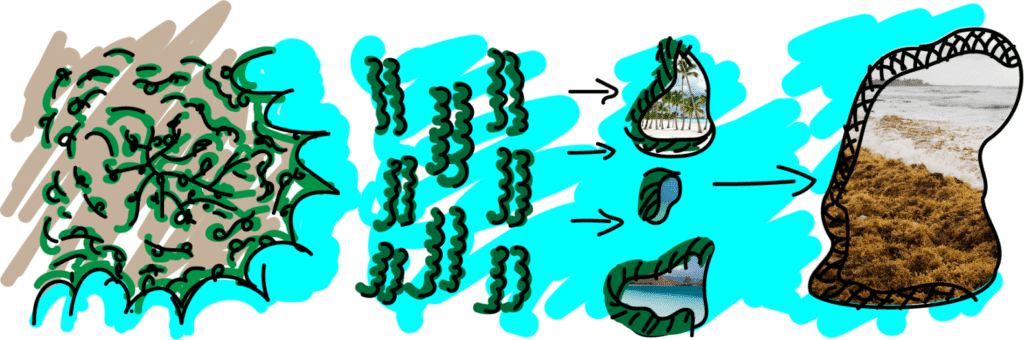
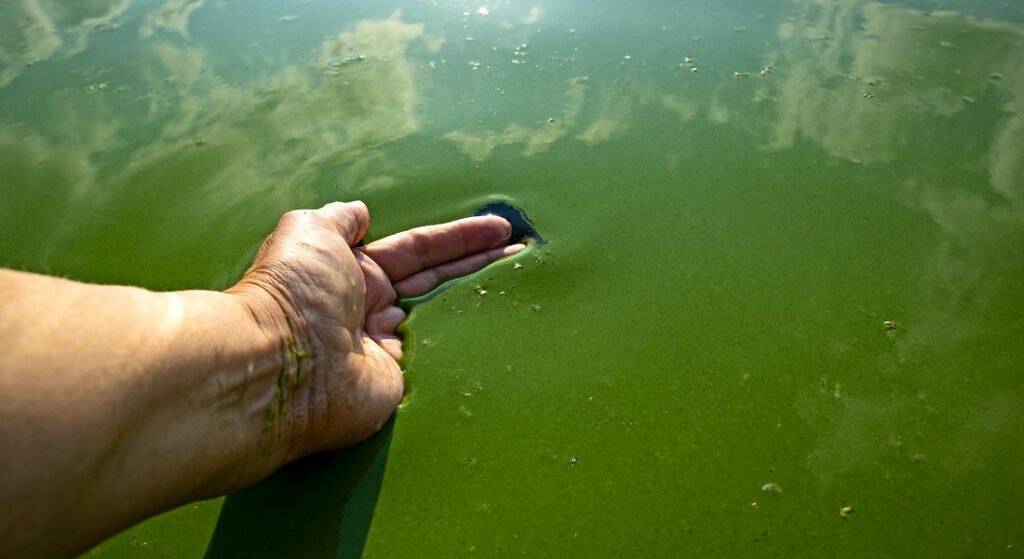
Sargassum is a floating seaweed (alga) that forms primarily in the North Atlantic Ocean, nourished by mineral-rich dust from the Sahara Desert and nutrient-laden runoff from nearby rivers. Under the right conditions, these nutrients trigger rapid algal blooms, resulting in massive mats of Sargassum drifting toward the Caribbean.
While Sargassum supports marine life in open waters, its uncontrolled accumulation poses serious ecological and socio-economic challenges. Excessive growth can smother coral reefs, deplete oxygen in coastal waters, and kill marine species. Its sudden and unpredictable arrival on shorelines, often overnight blankets beaches and disrupts local ecosystems. As the seaweed decomposes, it releases methane gas, producing a strong odour that affects the region’s natural appeal and severely disrupts the tourism industry, a key economic pillar for many Caribbean communities.
Local efforts to manage the influx are labor-intensive, expensive, and often unsustainable. Meanwhile, the world continues to face another growing environmental crisis: plastic pollution. Around 8 million metric tons of plastic enter the ocean each year, the equivalent of one garbage truck every minute. The Great Pacific Garbage Patch alone spans an area twice the size of Texas. These plastics persist for centuries, breaking down into microplastics that harm marine ecosystems and contaminate the food chain.
Given these challenges, this paper investigates the potential of using both Sargassum and ocean plastics to develop a high-performance, durable, and environmentally responsible material. The proposed application is in the soles of athletic and sports footwear, offering a socially conscious, innovative, and economically viable solution.
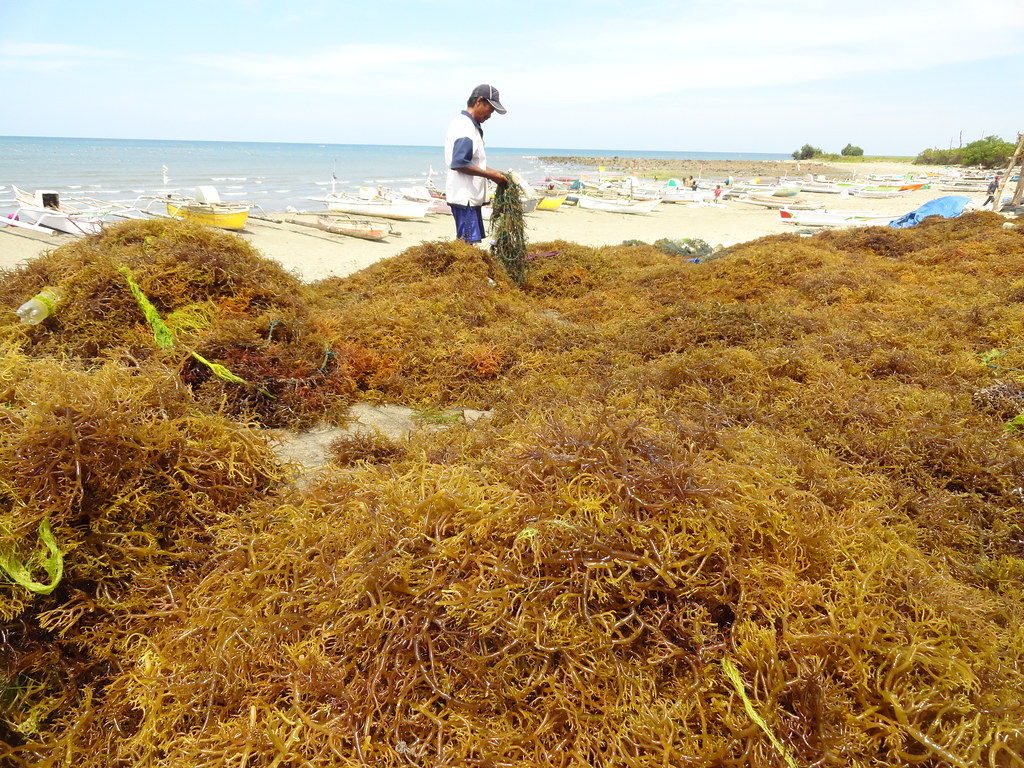
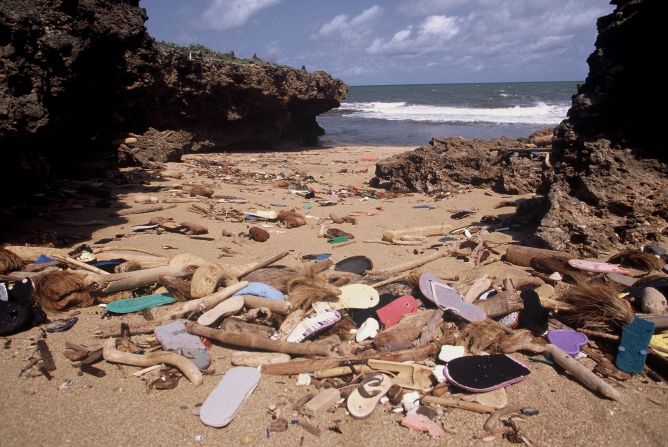
Assessing the Effects on the Triple Bottom Line: People, Planet, and Profit
Causes respiratory issues, affects fragile fishing and tourism industries
Smother coral reefs, reduce oxygen levels in the water, release methane, and kill fish
In 2022, industry losses reached $102 million, with cleanup costs at $210 million
Understanding the Chemical Structure of Sargassum
I began this research project by first understanding the chemical composition of algae, with a particular focus on Sargassum, by studying its molecular makeup, I aimed to identify the various compounds it contains and evaluate their potential for use in commercially viable, bio-based products.
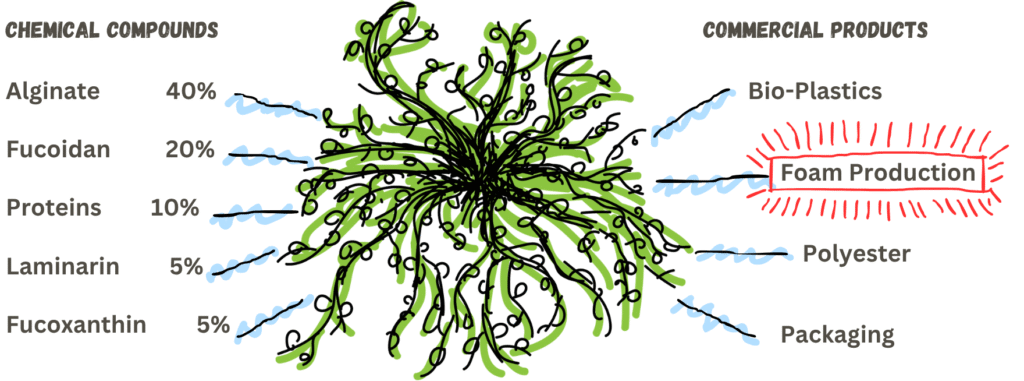
One of the most significant components found in Sargassum is alginate, which makes up approximately 40% of its structure. Alginate is a naturally occurring polymer also used in everyday items like ice cream (as a thickener), wound dressings (as a healing agent), and even dental molds. In industrial applications, it holds the potential to produce bio-plastics, packaging materials, polyesters, and foams—sustainable alternatives to traditional petrochemical products.
For this study, I chose to focus on the development of bio-based foam, specifically for use in the soles of technical sports footwear. This concept is inspired by Bloom Foam, a company that manufactures high-performance foam using blue-green algae. Their materials are already being used by major brands like Nike and Adidas, proving that bio-innovations can perform at scale.
Drawing from their model, my research explores how Sargassum, which washes up in massive quantities on Caribbean coastlines, could be transformed into a similar high-functioning foam. This approach presents a promising opportunity to tackle an environmental issue while creating economic value. By redirecting this abundant nuisance into a valuable resource, the initiative could support local employment, stimulate sustainable manufacturing, and provide relief to fragile tourism and fishing economies—all while offering a cleaner alternative to petroleum-based materials.
Research into the Bloom Foam manufacturing process
EVA Polymer – 48%
EVA provides the foam’s cushioning properties, flexibility, and durability
Algae Biomass – 48%
Blowing Agents – 1%
Blowing agents are responsible for expanding the EVA into a foam structure.
Inks & Additives – 1%
Used to add color, enhance UV resistance, or alter the foam’s texture.
I began by studying the manufacturing process of BLOOM Foam to gain a clearer understanding of the materials, methods, and equipment required to produce a similar bio-based foam. This step was crucial, especially considering the potential need to set up processing units on remote or less accessible Caribbean islands, where logistical challenges must be accounted for.
BLOOM Foam is primarily composed of two main components: approximately 48% elastomeric EVA (ethylene-vinyl acetate) and 48% algae biomass, along with small additions of a blowing agent and pigments (inks or dyes) making up around 1% each. This formulation achieves both durability and performance, making it a strong reference model for developing sustainable, functional foams from locally sourced materials like Sargassum.
Process flows
The Algae used in ‘BLOOM FOAM’ is Blue-Green Algae (Cyanobacteria)
Algae used in this process is typically sourced from freshwater lakes, ponds, or controlled algae farms to ensure quality and sustainability. The freshly harvested, wet algae is first mechanically compressed to remove excess moisture. It then undergoes thermal drying to eliminate any remaining traces of water. The resulting dry biomass, often referred to as residual algae cake, is then ground into a fine powder.
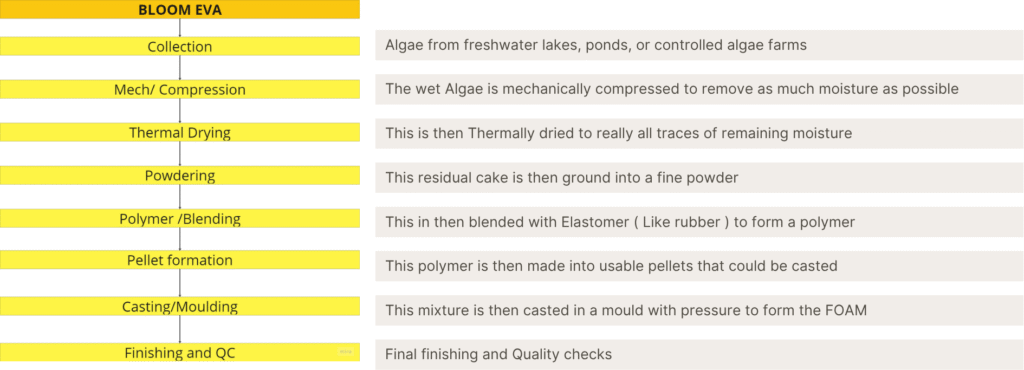
This powdered algae is subsequently blended with an elastomer—a flexible, rubber-like material—to create a bio-based polymer. The polymer blend is then processed into pellets, which serve as the raw material for manufacturing. These pellets are cast into molds under pressure to form the desired foam structure. Finally, the molded foam undergoes finishing processes and rigorous quality checks to ensure it meets performance and durability standards.
Comparative Life Cycle Assessment (LCA) of BLOOM EVA Foam vs. 100% EVA Foam
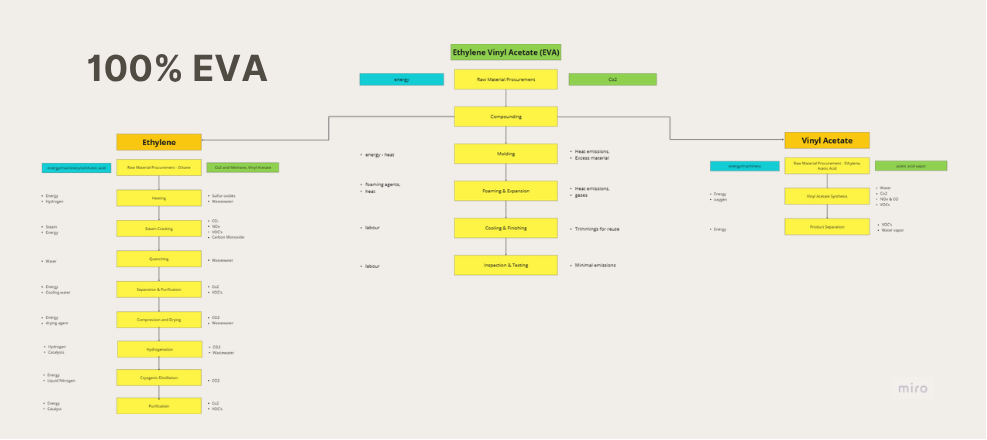
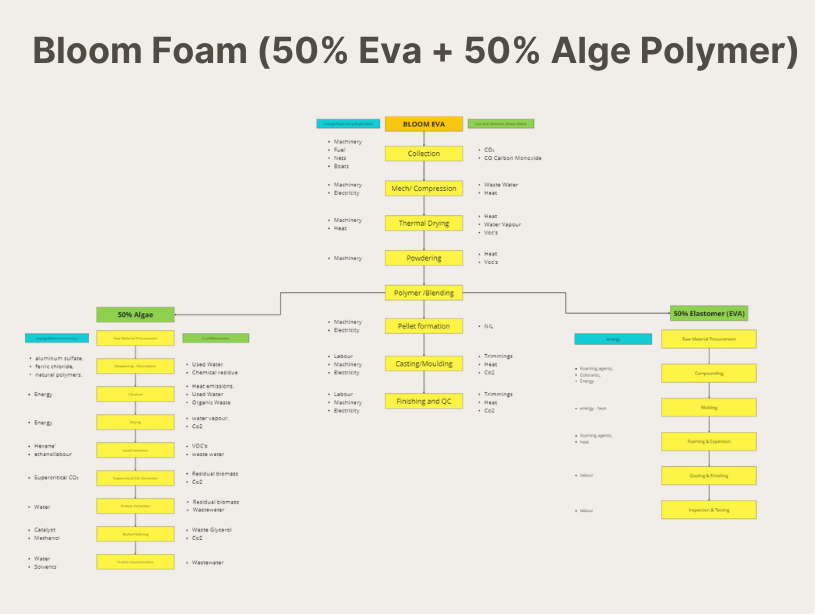
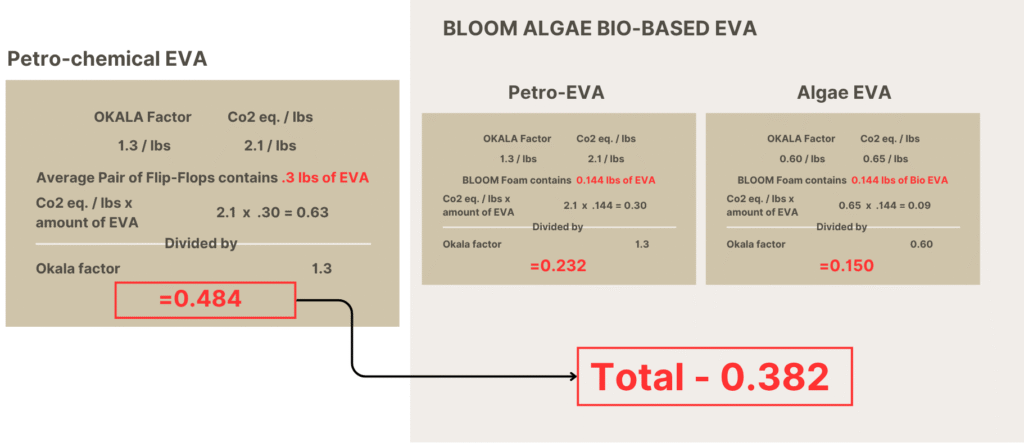
I began this phase of the project by conducting a comparative Life Cycle Assessment (LCA) of two materials: 100% petrochemical-based EVA (ethylene-vinyl acetate) and BLOOM foam, which consists of approximately 48% recycled EVA reclaimed from marine waste and 48% algae-based bio-polymer. The purpose of this analysis was to evaluate and compare the environmental impact of both manufacturing processes, particularly their carbon emissions.
Given that the average pair of sneakers contains approximately 0.3 lbs of foam, I developed a detailed process map for each material’s production and carried out an LCA using the OKALA impact assessment method, a widely used framework for evaluating the environmental performance of materials across their life cycle.
The results showed that producing one pair of soles using 100% petrochemical EVA generates approximately 0.484 lbs of CO₂, while the BLOOM foam alternative produces only 0.382 lbs of CO₂—a reduction of 0.102 lbs per pair. While this may seem small, it adds up significantly at scale. For instance, if a company like Nike, which produces over 780 million pairs of shoes annually, were to adopt BLOOM foam across even 10% of their product line, it could result in a reduction of over 7.9 million lbs (or ~3,580 metric tons) of CO₂ emissions per year.
To put the per-shoe reduction into everyday terms, a 0.102 lb reduction in CO₂ emissions is equivalent to the amount of CO₂ a typical passenger car emits from driving about 0.11 miles (180 meters). When scaled across millions of units, this reduction becomes a powerful contributor to sustainable manufacturing and climate-conscious design.
This outcome is highly encouraging for the direction of the research and further supports the case for using algae-based and reclaimed materials as viable, low-impact alternatives in high-volume consumer products.
From Seaweed to Sole: Prototyping Biofoam from Sargassum
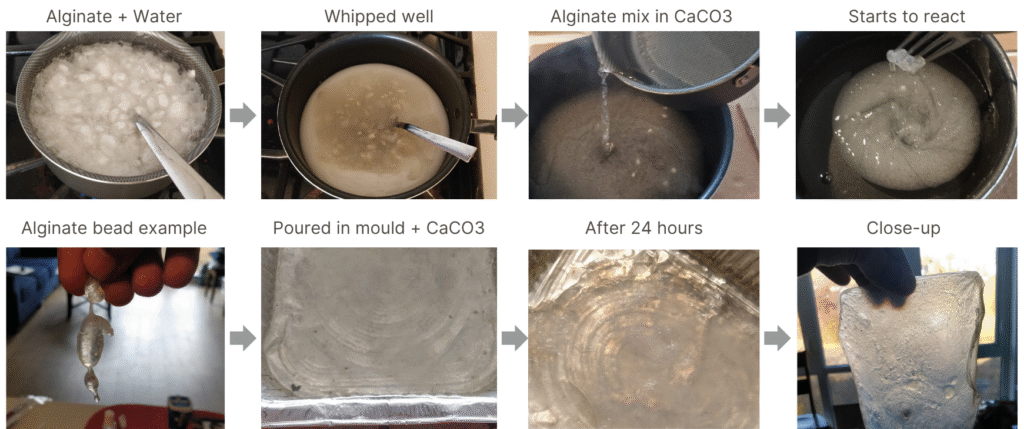
I then conducted a series of controlled experiments to explore how foam could be manufactured using the selected Sargassum seaweed. The process involved dissolving sodium alginate (a natural thickener derived from seaweed) in water and gently heating it. This solution was then added to a calcium carbonate bath, which caused it to gel. Finally, the mixture was poured into a mold.
As you can see in the final image below, this process produced a translucent, foamy material that looks and feels similar to the foam used in Nike Air soles, lightweight, slightly squishy, and flexible.
This demonstrates that Sargassum has strong potential as a raw material for creating bio-based foam, which could be used in high-performance footwear.
Enhancing the Foam for Footwear Soles
As an extension of the initial experiment using Sargassum-based foam, I tested how the material could be strengthened and made more elastic to suit the needs of high-performance footwear soles.
To do this, I added small quantities of:
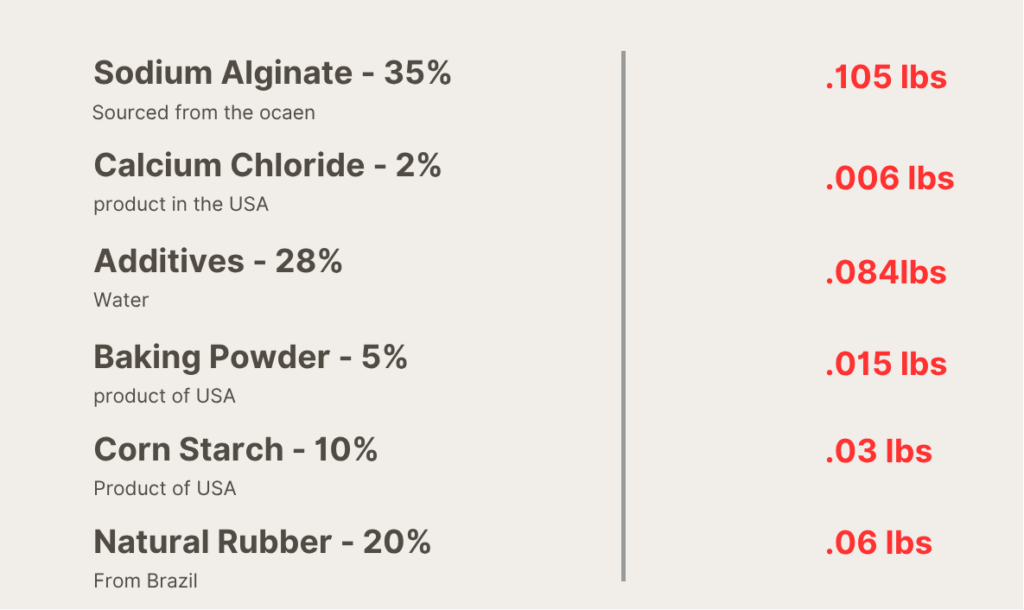
Baking powder – which acted as a foaming agent, helping the mixture expand and become more lightweight.
Cornstarch – to improve structure and consistency, similar to how it’s used in biodegradable packaging.
Natural rubber – to provide flexibility and resilience, making the foam more bouncy and shock-absorbent, like what you’d expect in a running shoe.
Think of this like baking bread, the baking powder helps it rise, the cornstarch gives it shape, and the rubber is like adding a stretchy dough to make it chewy. Together, they create a foam that is not only strong but also elastic, perfect for the bottoms of shoes that need to bend, cushion, and support the wearer.
Material Ratios and Scale
For producing 0.3 lbs (approximately 136 grams) of foam , roughly the amount needed to make one pair of footwear soles , I used the above additives in carefully measured ratios to optimize performance without compromising the material’s biodegradability.
Life Cycle Assessment (LCA) Comparison
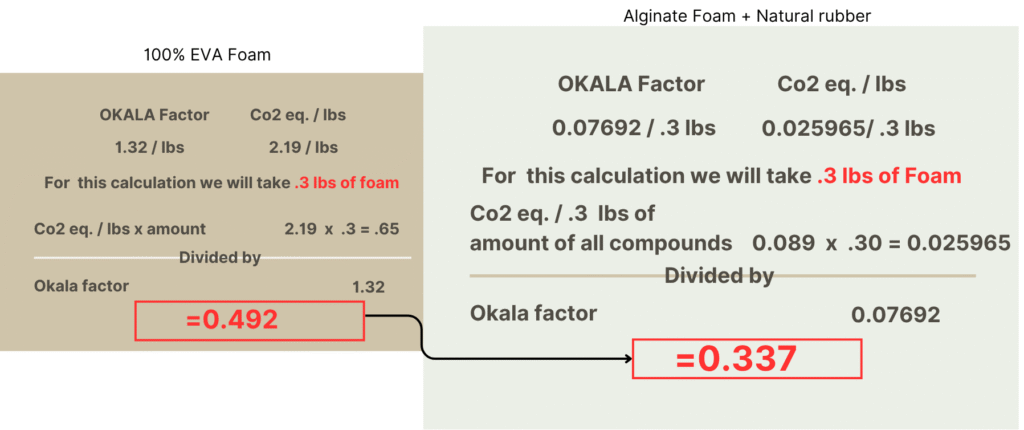
To evaluate the environmental impact, I conducted a detailed comparative Life Cycle Assessment (LCA) between:
Standard Bloom foam (a popular bio-based foam currently used in footwear)
& My Sargassum-based foam composite
The assessment followed standard LCA methodology, examining factors like:
- Raw material sourcing
- Water and energy usage
- Emissions and waste produced
- End-of-life disposal impact
The results were promising:
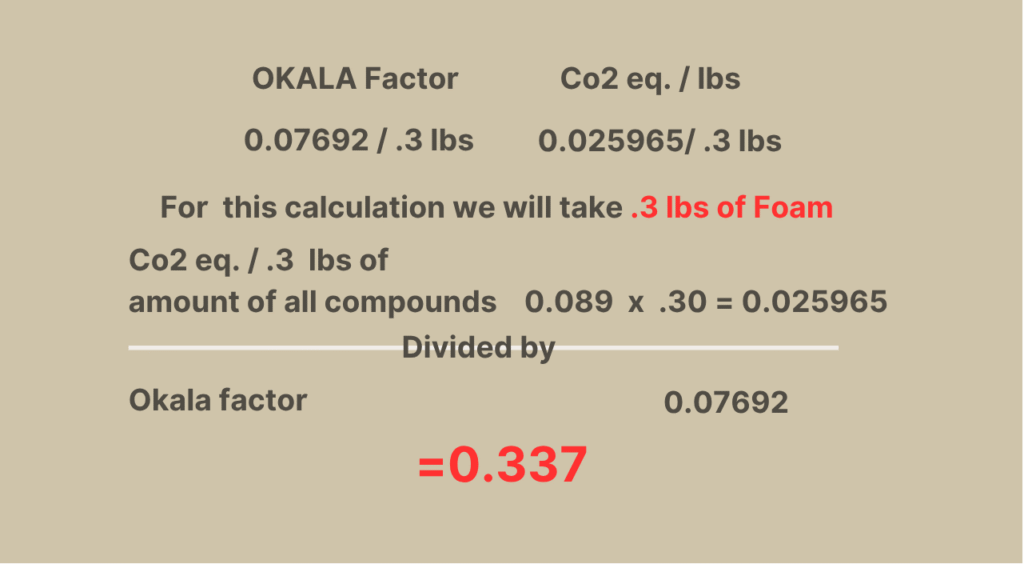
The Sargassum-based foam showed a 0.155-point reduction in the Okala impact factor compared to standard Bloom foam.
This means the Sargassum foam had a lower overall environmental burden, including reduced greenhouse gas emissions and resource depletion.
Simple comparison:
It’s like switching from a gas car to a hybrid, you’re still getting performance, but with much less environmental cost.
Manufacturing Bio-Foam from Sargassum Seaweed
Research shows that Sargassum seaweed begins to decay and decompose almost immediately after washing ashore, releasing hydrogen sulfide gas and ammonia, which can cause respiratory issues in humans and damage nearby ecosystems. According to a 2019 report by the University of South Florida, the Great Atlantic Sargassum Belt has grown to stretch over 8,000 kilometers, and in peak seasons, over 20 million tons of Sargassum can accumulate in the Atlantic and Caribbean. This seaweed invasion disrupts marine life, smothers coral reefs, and significantly affects fishing and tourism—the backbone of many Caribbean island economies. For example, the Caribbean Tourism Organization reported millions in tourism losses during heavy bloom years due to unsightly and foul-smelling shorelines.
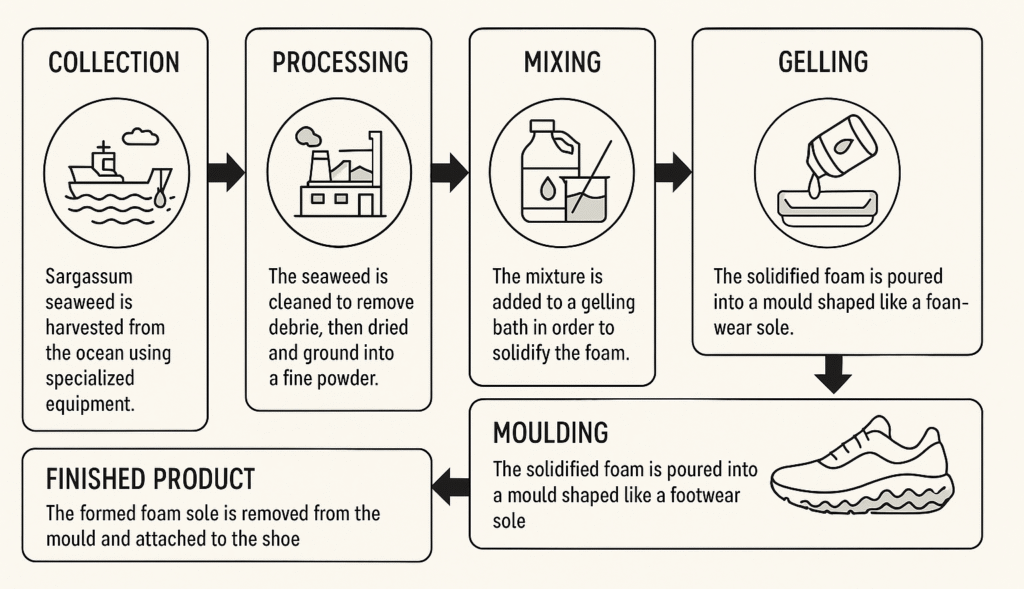
Traditionally, responses to Sargassum blooms have been reactive, addressing the issue only after it makes landfall. Based on my research, I propose a more proactive solution: harvesting Sargassum directly from the ocean before it reaches the shore. This reduces its environmental and economic impact and ensures the biomass is collected fresh, ideal for processing into bio-based materials like biodegradable foams for footwear. It’s a sustainable approach that benefits people, profit, and the planet.
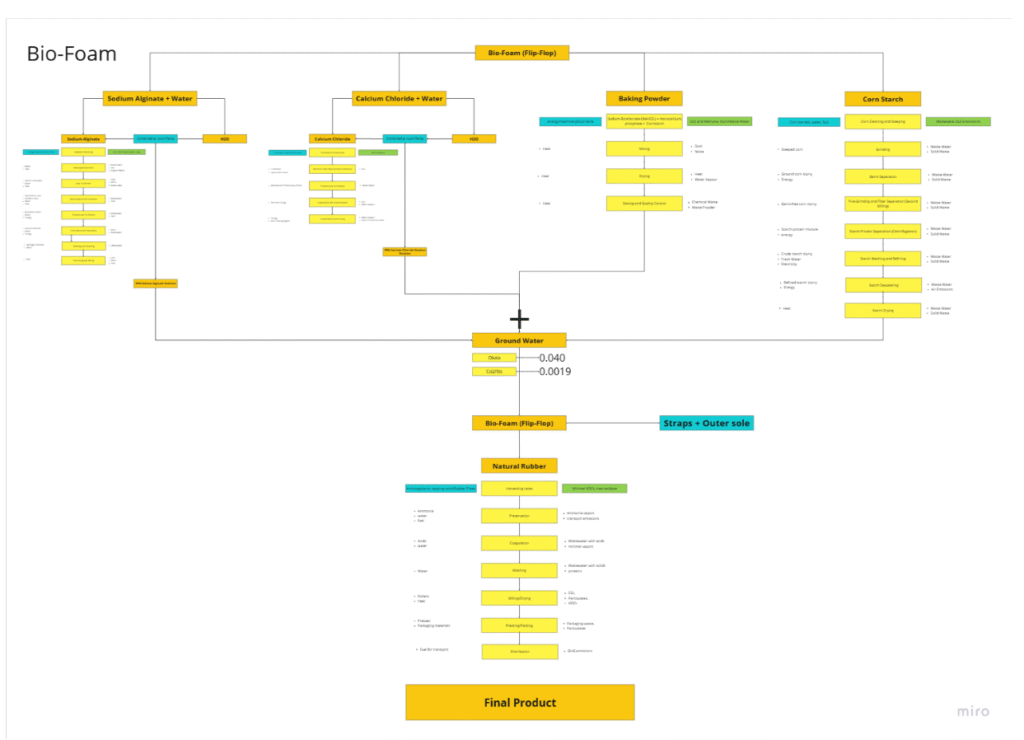
Once harvested, the Sargassum is cleaned with fresh water to remove salt, sand, and organic debris, then dried under the sun or in industrial dryers. The dried seaweed is ground into smaller particles for extracting sodium alginate, a natural polymer found in brown algae that acts as a thickener and gel-former, much like gelatin or cornstarch.
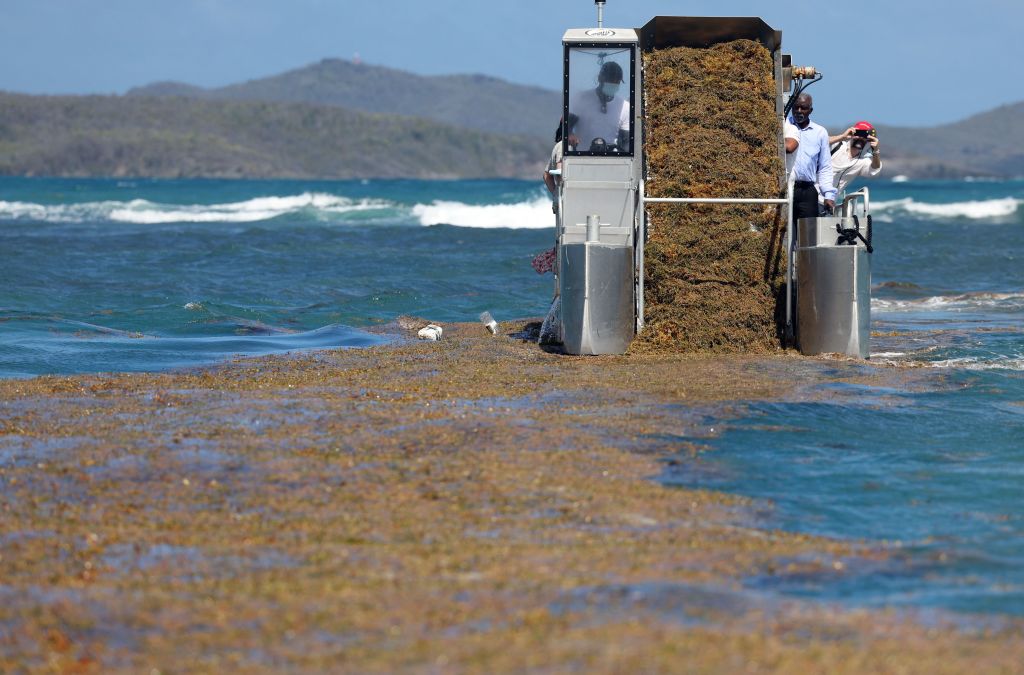
To extract the alginate, the ground seaweed is soaked in an alkaline solution such as sodium carbonate. This helps dissolve the alginate into the water. The solution is then filtered to remove solid particles, and a precipitating agent like calcium chloride or acid is added to isolate the alginate. Once separated, it is dried and stored as a fine powder for use in foam manufacturing.
In the next phase, the alginate powder is rehydrated by mixing it with warm water to form a thick gel. Small quantities of baking powder are added to act as a foaming agent—creating tiny air pockets within the mixture. Cornstarch is introduced to give the foam added stability and a slightly firmer texture. For elasticity and resilience, natural rubber (latex) is incorporated into the mix. When gently heated, the baking powder reacts and causes the entire blend to expand, much like how a cake rises in the oven. This produces a light, airy foam that is still soft and pliable.
The expanded foam is then immersed in a calcium bath, typically containing calcium carbonate or calcium chloride. This cross-linking step is crucial—calcium ions bond with the sodium alginate, solidifying the structure while maintaining its flexibility. It’s a process similar to curing or hardening a gel, resulting in a foam that can maintain its shape under pressure.
After cross-linking, the foam is poured into molds shaped like footwear soles. These molds are designed with specific contours, tread patterns, and thicknesses to match athletic or casual shoe designs. The foam is allowed to cure fully—either by air-drying or low-temperature heating—until it becomes a durable, springy sole.
The cured soles are then removed from the molds, and finishing touches are applied. This includes trimming edges, smoothing surfaces, and making any required perforations or attachments for assembly. In some cases, additional layers such as textile linings or outer rubber soles are bonded for better grip, durability, and comfort.
Finally, the completed soles are subjected to quality tests to evaluate their strength, compression resistance, flexibility, and water resistance. These tests ensure the bio-based soles perform similarly to traditional petroleum-based foams, such as EVA or PU (polyurethane), while being significantly more eco-friendly.
Conclusion: Unlocking the Value of a Global Nuisance
The evidence is clear: Sargassum seaweed, once considered an invasive threat to Caribbean ecosystems and economies, holds immense untapped potential as a bio-based material for sustainable manufacturing. Through rigorous chemical analysis, material prototyping, and comparative life cycle assessments, this research has shown that Sargassum can be transformed into high-performance, biodegradable foam suitable for athletic footwear, offering a practical, scalable alternative to petroleum-derived EVA.
This is more than a scientific insight; it’s a commercial opportunity. The global footwear industry produces over 20 billion pairs of shoes annually, with foam soles representing a significant share of their environmental impact. If even a small percentage of those products transitioned to Sargassum-based foam, the ripple effects would be profound: measurable reductions in CO₂ emissions, economic revitalization for struggling Caribbean coastal communities, and a substantial leap toward meeting global sustainability goals.
For investors, this is a rare chance to support a product that is not only environmentally essential but also market-ready.
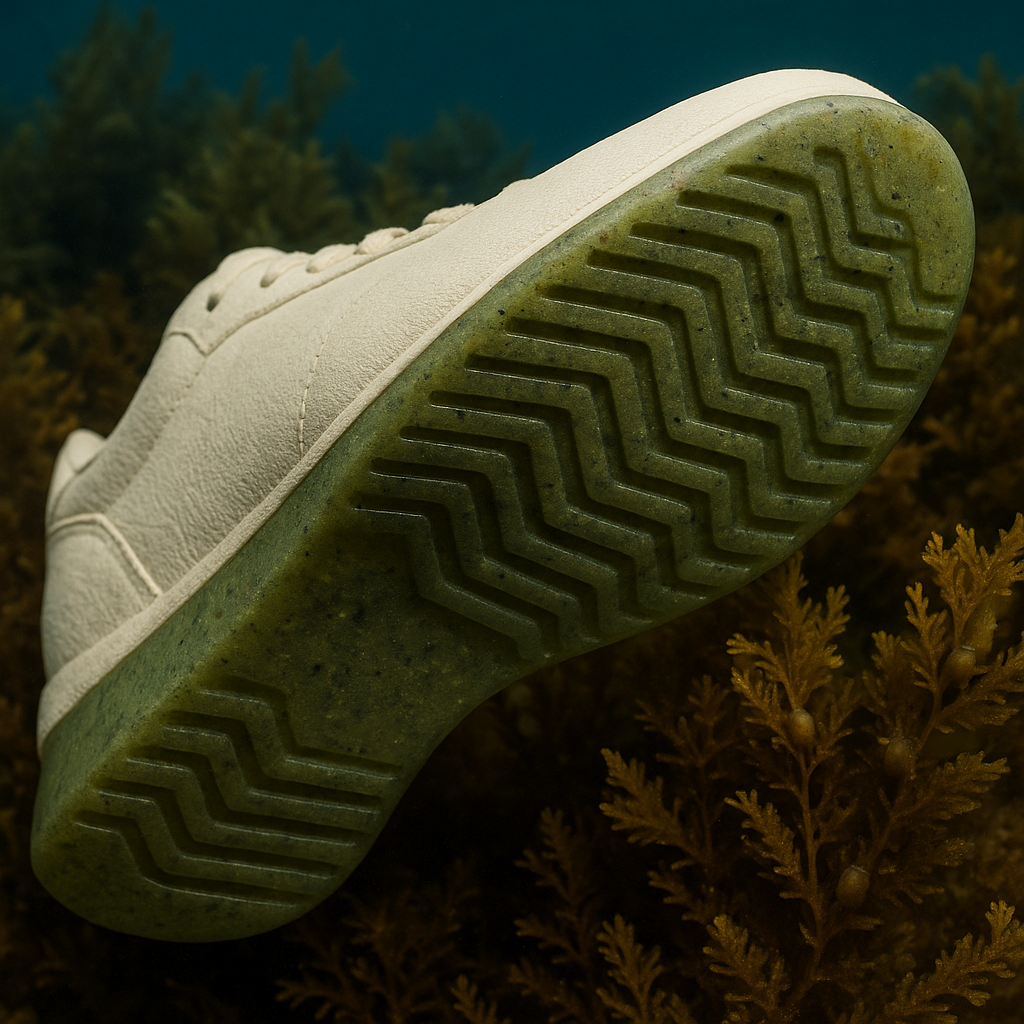
The parallels with Bloom Foam’s success, and its adoption by industry giants like Nike and Adidas, underscore the viability of algae-based foam in consumer markets. Sargassum goes one step further by offering a marine-waste solution that aligns with rising regulatory pressure and consumer demand for ethical sourcing and circular design.
In short, this research lays the foundation for a triple-win innovation, benefiting people, the planet, and generating profit. What’s needed now is the partnership and investment to commercialize the process, scale the operations, and bring this Caribbean-grown solution to the global stage.