NEW CASE STUDIES THE US STUDY

Peace is Not a Myth, Dave Remedios

Research & Case Studies  ·  Case Study 01

Peace is
Not a Myth

A strategic review of UN operations, delivering actionable recommendations to enhance efficiency and impact, examining peacekeeping mechanisms, financial structures and the path to meaningful institutional reform.

Project Details 01

Challenge

Analyse the United Nations as a strategic organisation and deliver actionable recommendations for operational improvement.

Approach

Business Canvas Model Landscape Analysis Financial Analysis Stakeholder Interviews

Team

Dave Remedios, Utsav Vekariya, Maria Kupriyanova

Type

Case Study  ·  Strategic Research

Institution

Parsons School of Design, New York
Focus

Global Governance

Method

Business Canvas · Interviews · Financial Analysis

Organisation

United Nations

Output

Strategic Recommendations for Reform

United Nations
Introduction

Why the
United Nations?

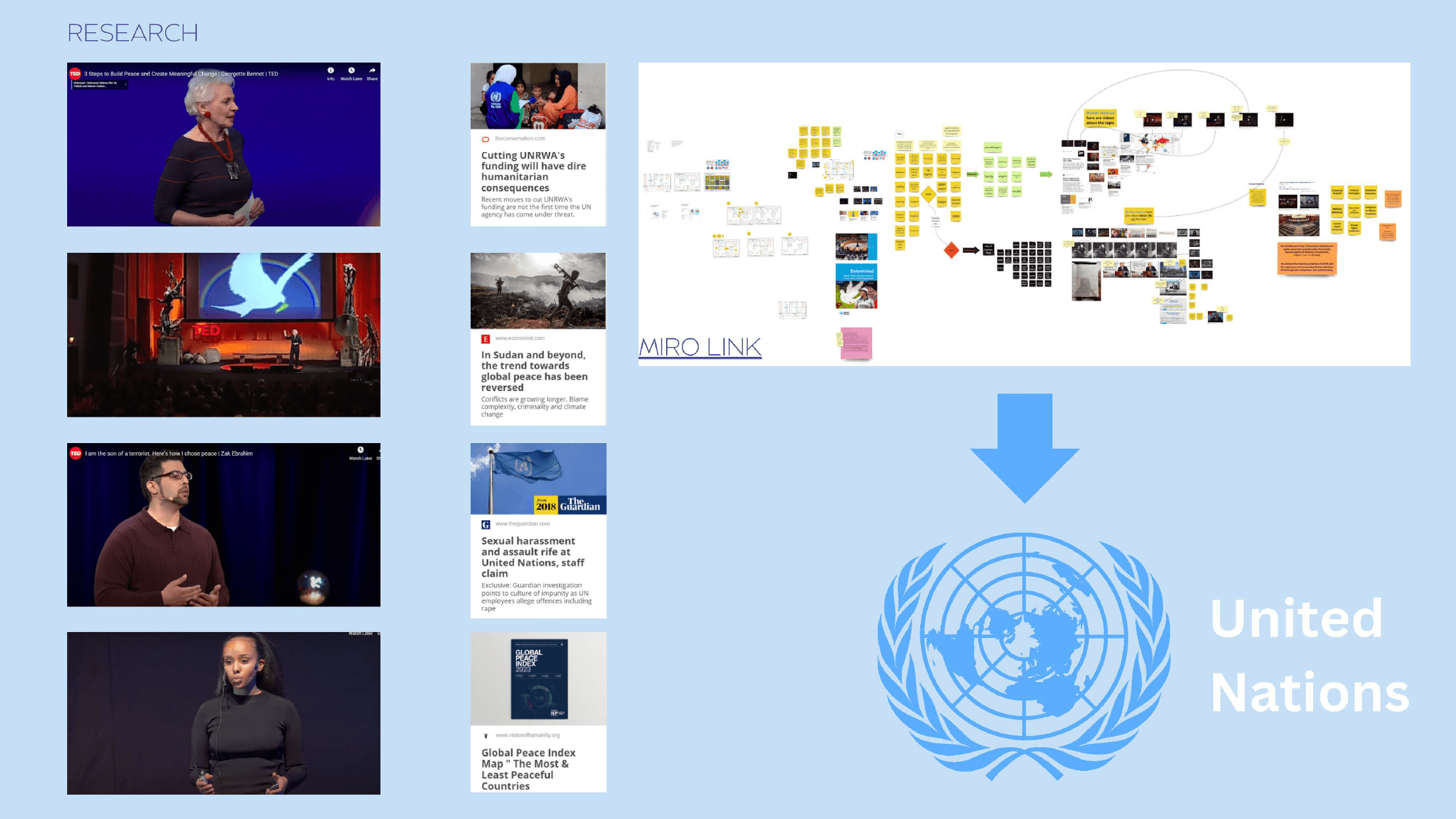
In conducting a landscape analysis, the team carefully selected excerpts from speeches delivered by prominent academics and activists emphasising the importance of peace worldwide. This information was cross-verified with publications from The Economist, Reuters and The Guardian.

Synthesising these research findings, the team arrived at an informed decision to focus the investigation on the United Nations, an organisation that sits at the intersection of global governance, peacekeeping and humanitarian impact.

"Peace is not a passive state but an active, ongoing project requiring institutional commitment, adequate resourcing and the political will to reform when the world demands it."

From the landscape analysis
Landscape analysis
Research

The UN as
a business

The team approached the United Nations as if it were a commercial organisation, subjecting it to the scrutiny of the Business Canvas Model. This proved a challenging but ultimately rewarding lens, revealing structural inefficiencies and untapped opportunities for reform across nine operational dimensions.

Business Canvas Model, United Nations Strategic Analysis

KEY PARTNERS KEY ACTIVITIES KEY RESOURCES VALUE PROPOSITIONS RELATIONSHIPS CHANNELS CUSTOMER SEGMENTS COST STRUCTURE FUNDING STREAMS Member States (193) Regional bodies World Bank / IMF NGO networks Media organisations Civil society groups Peacekeeping operations Humanitarian aid delivery Diplomatic mediation International law Development programmes Crisis coordination 44,000+ global workforce $3.4B+ annual budget 193 country offices Political legitimacy Intelligence networks International peace and security Human rights advocacy and protection Sustainable development SDG framework 2030 Global diplomacy forum and coordination Humanitarian aid crisis response at scale Multilateral treaties Bilateral agreements Public communications Field presence Security Council resolutions 193 country offices Peacekeeping missions Digital platforms Media and press Conflict-affected populations Refugee communities Member state governments Developing nations Global civil society Future generations Assessed contributions from member states Peacekeeping budgets ($6.8B assessed) Staff and administrative costs Field mission infrastructure Mandatory assessed contributions Voluntary donor contributions (unpredictable) Private sector and foundation partnerships In-kind contributions from member states
Financial Analysis

Following
the money

The team delved into the financial robustness of the United Nations, scrutinising its methods for acquiring and distributing funds, uncovering critical insights into spending patterns and structural vulnerabilities that undermine the organisation's mandate.

A persistent tension exists between assessed contributions from member states and the voluntary funding model, with the latter creating unpredictability in programme delivery that disproportionately affects the most vulnerable populations the UN is designed to serve.

193

Member states

$3.4B

Regular budget

44K+

Global workforce

12

Active missions

UN CASH FLOW, FUNDING JOURNEY FROM SOURCES TO IMPACT Member States Assessed $10.2B Voluntary Donors Unpredictable $4.2B Private / In-kind $1.1B United Nations Secretariat · UNHQ Peacekeeping 47% · $6.8B · 12 missions Humanitarian Aid 28% · $4.1B Development SDGs 15% · $2.2B Administration 10% · $1.5B Conflict resolution 193 nations served Crisis response 100M+ beneficiaries Critical funding gap Voluntary contributions are irregular, creating programme shortfalls and delivery unpredictability.
Cash flow, UN funding journey from sources to programmatic impact
Commerce and Impact Analysis

Measuring
real-world impact

The team analysed commerce and impact across all Business Canvas Model components, assessing where the UN delivers measurable value and where structural gaps undermine its mandate across peacekeeping, humanitarian delivery, diplomacy and the 2030 SDG agenda.

COMMERCE AND IMPACT ANALYSIS, UNITED NATIONS VALUE DELIVERED ACROSS BCM COMPONENTS Peacekeeping Operations 12 active missions Africa · Middle East · Asia · Americas $6.8B budget · 47% of total spend Impact: Conflict reduction in fragile states ★ Largest single expenditure line Humanitarian Programmes 100M+ people reached via UNHCR, WFP, UNICEF $4.1B budget · 28% of total spend Food · shelter · medical aid globally ★ Largest reach by beneficiaries Diplomatic Framework 560+ multilateral treaties administered 5 permanent Security Council members International law, norms, dispute resolution ★ Most contested reform area STRUCTURAL GAPS, WHERE IMPACT FALLS SHORT Funding Volatility $4.2B voluntary contributions unpredictable, causes gaps Risk level: High Veto Paralysis Security Council veto blocks action in critical conflicts Risk level: Structural Mandate vs Capacity Broad mandate unmatched by resources or political will Risk level: Systemic Bureaucratic Friction Slow decisions reduce impact velocity in fast-moving crises Risk level: Operational SDG IMPACT SCORECARD, 2030 AGENDA PROGRESS SDG 1, No Poverty 55% SDG 3, Good Health 70% SDG 4, Quality Education 50% SDG 13, Climate Action 30% SDG 16, Peace & Justice 40% 0% 50% 100% Key finding The UN delivers measurable value across peacekeeping, humanitarian aid and diplomacy, but structural funding gaps and veto paralysis limit its full potential. Reform is an operational necessity.
Commerce and impact analysis, value delivered, gaps and SDG progress
Interviews

Direct from
the frontline

The team was fortunate to conduct an interview with the Inspector General of the UN Peacekeeping Forces, gaining direct insight into systematic issues within the organisation. The conversation covered potential areas for improvement across operational, financial and structural dimensions.
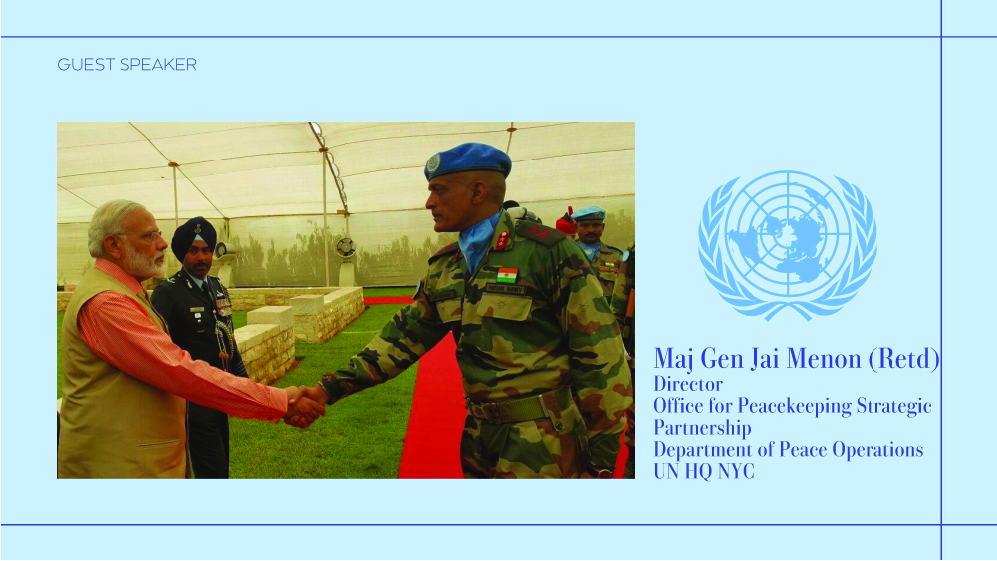
Interview with UN Inspector General
Interview, UN Peacekeeping Forces Inspector General

On reform

"It is time for people like us to take a keen interest in our collective future and help reform this aging organisation, to make it more effective for our own sake."

Inspector General, UN Peacekeeping Forces

On structural issues

"Certain aspects of the organisation are still stuck in the past and outdated in today's world, making it look like a toothless tiger. Reform is the need of the hour."

Inspector General, UN Peacekeeping Forces

On peacekeeping capacity

"The forces on the ground are doing extraordinary work with extraordinary constraints. The gap between mandate and resource is where the institution fails the people it is meant to protect."

Inspector General, UN Peacekeeping Forces

On the path forward

"The United Nations needs to be provided with all the resources and powers it needs to work for a safer, more peaceful world. That conversation starts with people who care enough to push for it."

Inspector General, UN Peacekeeping Forces

Recommendations

Actionable
pathways to reform

Based on the interviews, financial analysis and Business Canvas assessment, the team pinpointed areas for improvement while retaining successful practices, facilitating effective change management rather than wholesale disruption.

01

Funding Reform

Building a predictable financial foundation

Transition from a purely assessed contribution model to one that includes alternative revenue streams, reducing dependency on voluntary funding and creating more predictable operational budgets for humanitarian programmes and sustained peacekeeping capacity.

02

Security Council Modernisation

Reforming the veto for a multipolar world

Reform the veto mechanism to reflect the contemporary geopolitical landscape, enabling the Council to act more decisively in the face of humanitarian crises without being paralysed by Cold War-era power dynamics that no longer reflect global realities.

03

Peacekeeping Effectiveness

Investing in rapid-deployment capability

Invest in rapid-deployment capacity and mandate clarity for peacekeeping missions, ensuring forces have the resources, rules of engagement and political backing needed to fulfil their objectives in the most fragile and conflict-prone environments.

04

Digital Transformation

Modernising for the 21st century

Modernise UN communication, data and operational systems to improve coordination across agencies, reduce bureaucratic friction and enable faster, evidence-based decision-making at all levels of the organisation and its field operations.

Conclusion

The UN is integral to world peace. But an aging institution needs reform, not dismantling.

This project made clear that the United Nations, despite its structural challenges and the perception of it as a toothless tiger, remains irreplaceable to maintaining global order. The organisation needs to be provided with the resources, powers and structural reforms it needs to work effectively for a safer, more peaceful world.

4

Recommendations

9

Canvas dimensions

1

Inspector General interview

Next case study

From scrap metal to currency

Ecocent, Circular Economy Case Study

View project
Scroll to Top